


A closer look at some of the latest developments in ammunition technology.
I know folks snort and complain every time a new bullet or cartridge is invented and offered for sale. Thank goodness this was not the trend in 1926 with the .270 Winchester, in 1948 when John Nosler created the Nosler Partition … or in the mid-1980s when Walt Berger pioneered the VLD bullet. All the new cartridges and bullets we’ve seen over the years get us one step closer to better cartridges and better bullets, but we must acknowledge that all along we have been taking baby steps in the search for perfection.
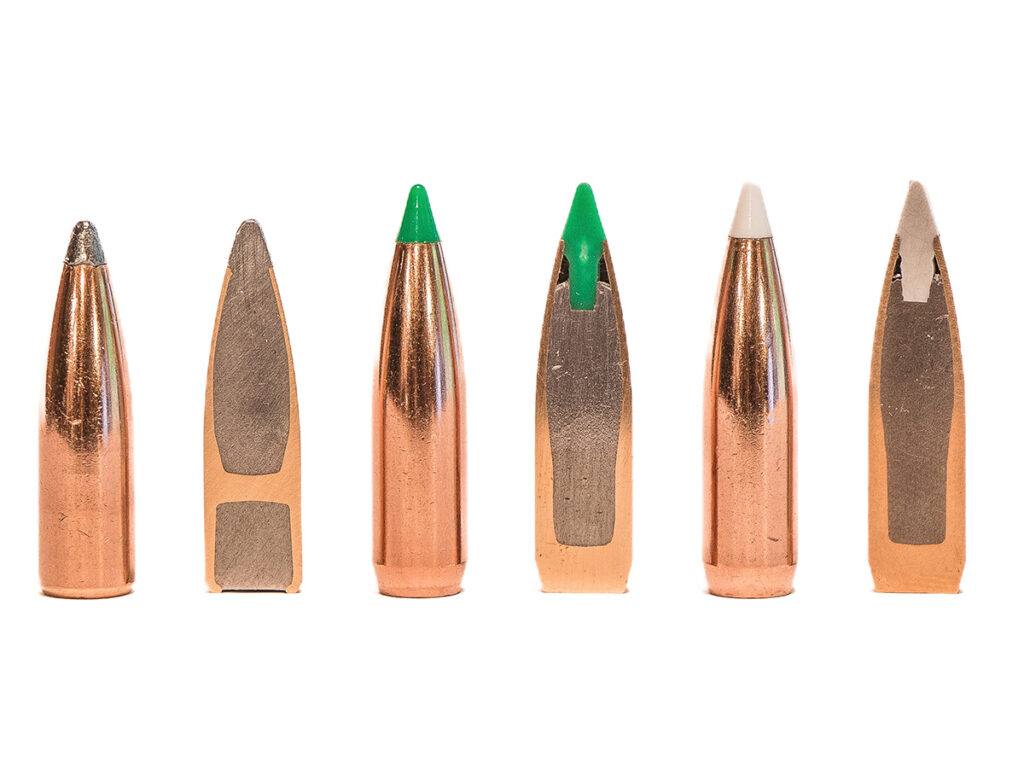
The modern rifle bullet started with a simple cup-and-core design that used a thin copper jacket over a pure lead core. This worked until velocities climbed to the point these bullets would not withstand impact with an animal. This led to bullets with tapered jackets, jackets that attempted to lock together with the core, partitioned jackets and jackets bonded to the bullet’s core.
Eventually, all this progress gave us the mono-metal X Bullet and the various iterations of that design and other lead-free projectiles. All these bullets were attempts to create an accurate bullet that would also deliver great terminal performance up close at high velocity and far away at much slower velocities.
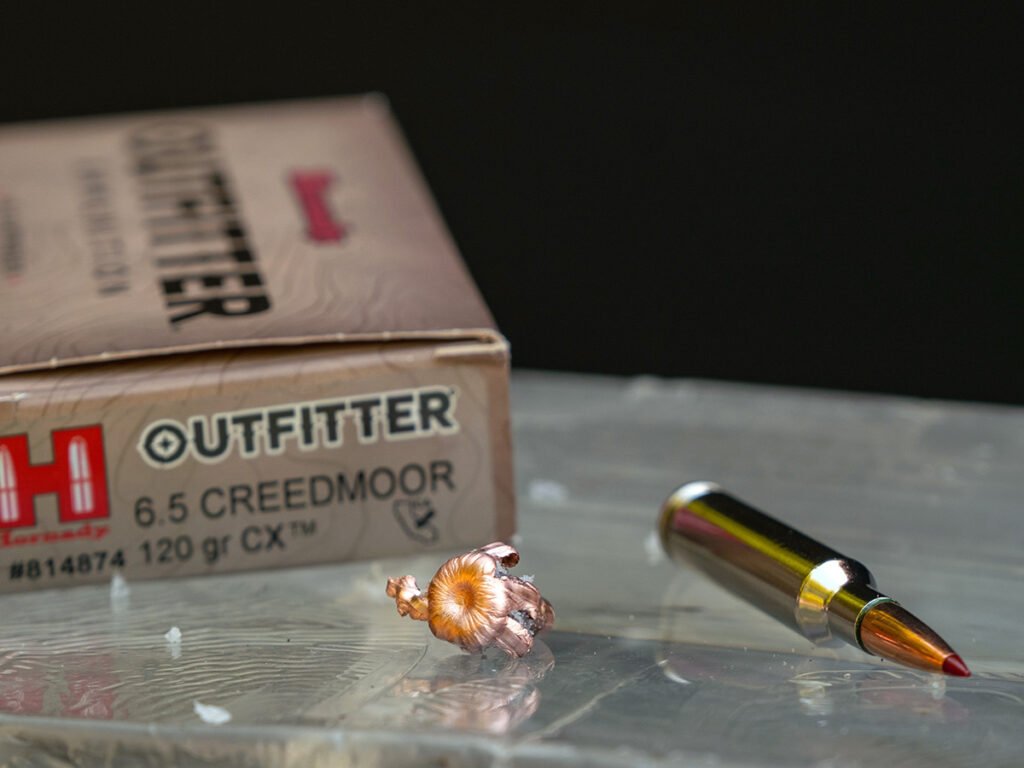
We got pretty good at making those bullets until about 2010. The new 6.5 Creedmoor and the similar fast-twisted, long-range cartridges that followed are capable of flatter, more wind-defying trajectories at distances most shooters only dreamed of shooting at. Why? Because all these new cartridges utilized a fast rifling twist rate that could stabilize a more aerodynamic bullet. This really pleased target shooters because, like with the Berger VLD, manufacturers were good at making target bullets with a high ballistic coefficient (BC).
However, hunters wanted a bullet that would shoot the same, but that would also provide good terminal performance up close and at extreme distance. Hunters had the cartridges they wanted, but once again lacked the bullets they needed.
The Nosler Partition And The Berger VLD
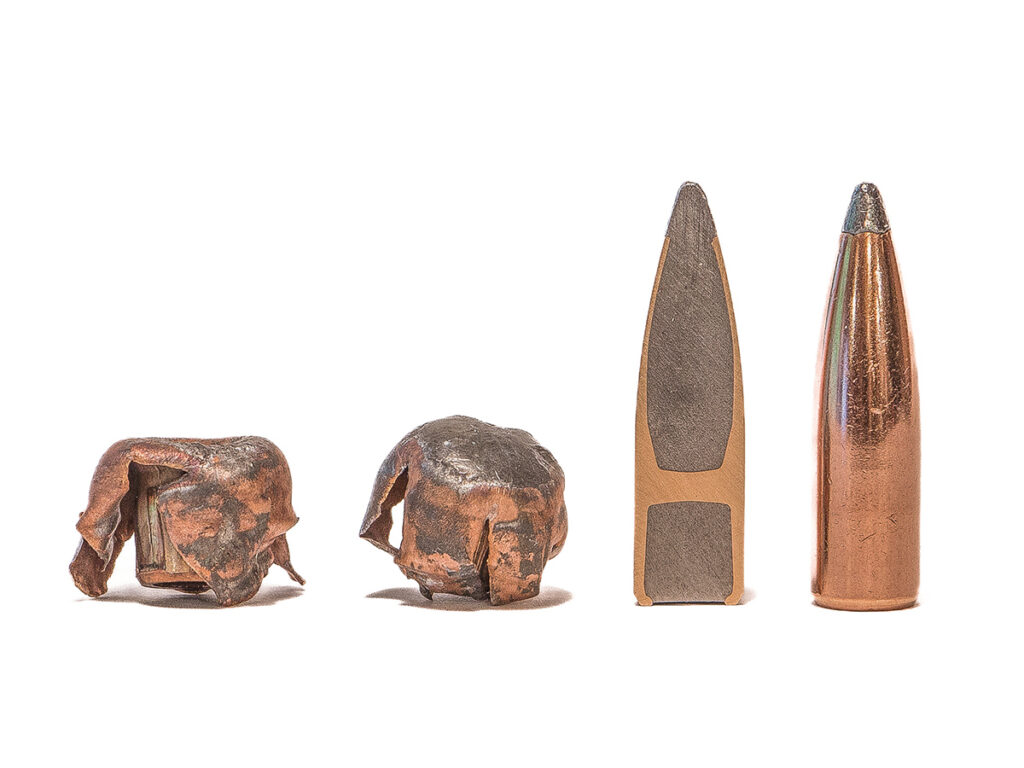
You could argue that, when it comes to terminal performance and precision, the Nosler Partition and the Berger VLD are the gold standards. The Nosler Partition is designed to shed its front core to enhance wound cavity size and tissue damage through the dispersion of lead particles, and for the rear core—with the deformed frontal jacket increasing frontal diameter—to retain enough weight for deep penetration. Though not known for delivering extreme precision, the Nosler Partition performs well—terminally—over a wide velocity range.

As for the Berger VLD, it combines an insanely streamlined profile with a thin copper J4 jacket surrounding a pure lead core. Using manufacturing techniques created by master benchrest shooter Walt Berger, this allowed the bullets to be made incredibly precise, which is what’s needed for extreme precision. Berger VLDs can deliver fine precision at extreme distance, and at distance they tend to deliver good terminal performance, though at a moderate depth. But when they impact at close range at high velocity, their terminal performance—though violent—is shallow.
Modern Attempts at Bullet Perfection
With the fast twist rates of modern rifle cartridges, you can shoot a longer more aerodynamic bullet with a higher BC. This is what target shooters and hunters want so they can get hits at distance easier.
But the struggle has been building long and slender high BC bullets that will deliver great precision and good terminal performance over a wide impact velocity range. Essentially, what’s needed is a bullet that flies like a Berger VLD but that performs—terminally—like a Nosler Partition.
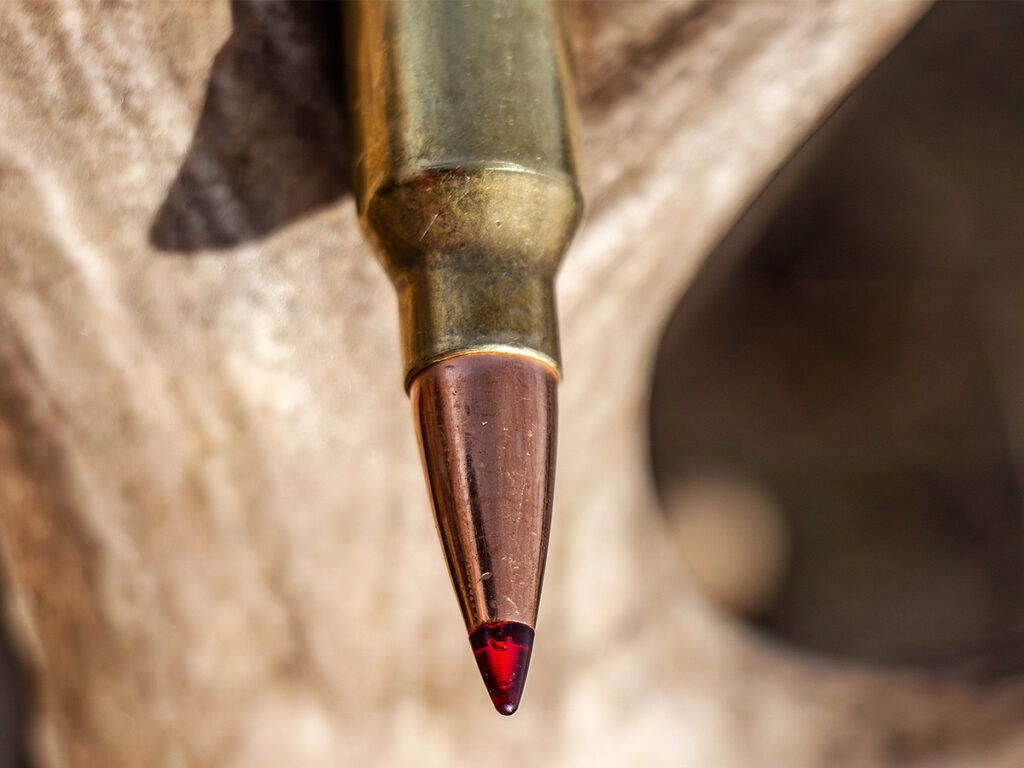
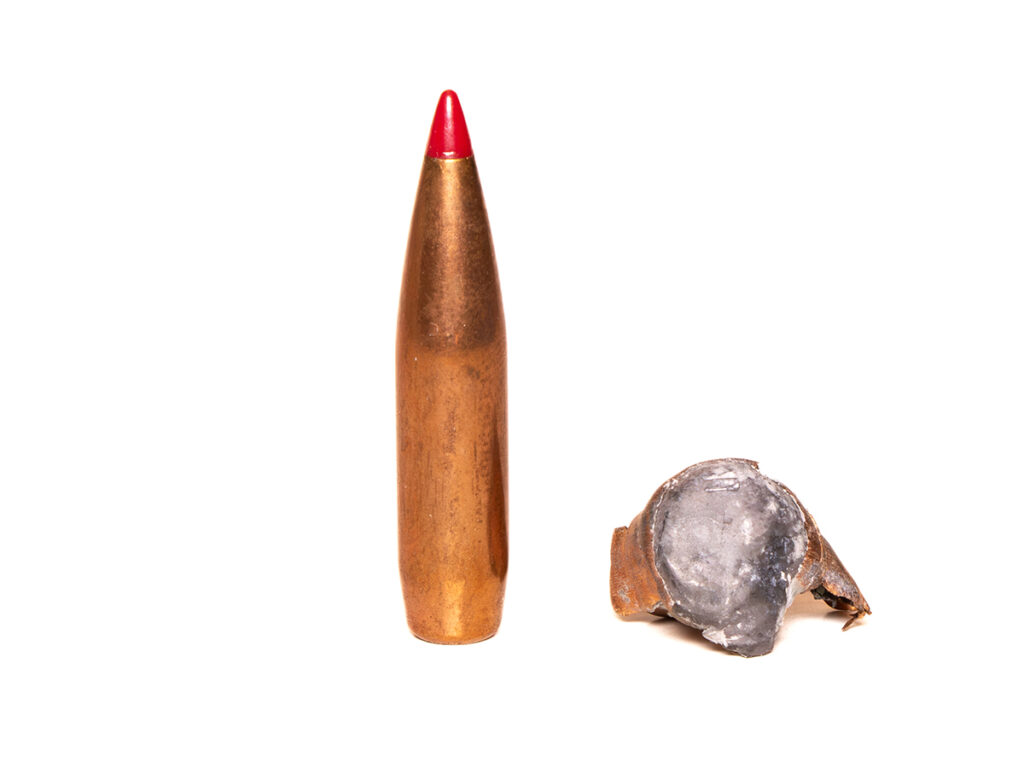
One of the most successful attempts has been the Hornady ELD-X. By utilizing the combination of a tapered and high concentric AMP jacket, a lead core, streamlined design, and a heat shield tip that helps maintain ballistic coefficient, the ELD-X bullet shoots with great precision and delivers good terminal performance at slow impact velocities.
However, at extreme high velocity impact—up-close shots with magnums—the ELD-X can shed its core and deliver limited penetration.
Barnes Bullets attempted the any-range bullet by increasing the hollow-point cavity size in their Triple Shock bullet and then adding a polymer tip to help instigate bullet upset at slow velocities. Their LRX bullet will flower open at slightly slower velocities than their TSX or TTSX bullets and retain—in most cases—100 percent of its weight for deep penetration.
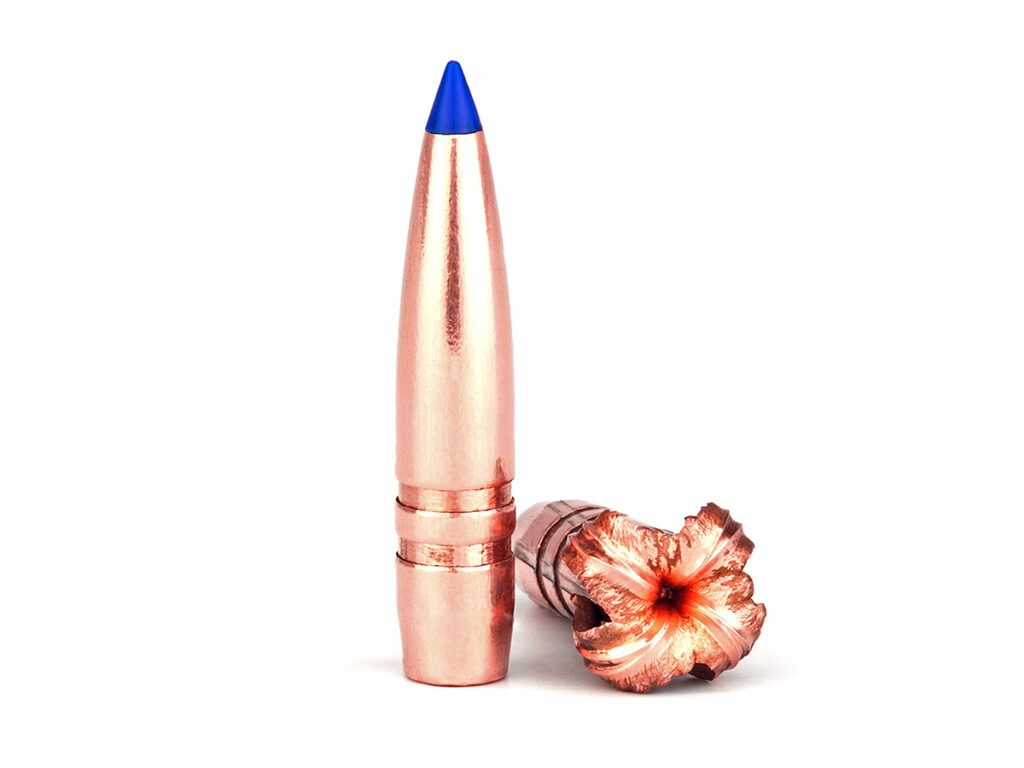
However, because this bullet does not shed material like the Nosler Partition, wound cavities tend to be narrow. As with a lot of recent modern bullet options, it seemed like we tend to have too much of one thing and not enough of the other.
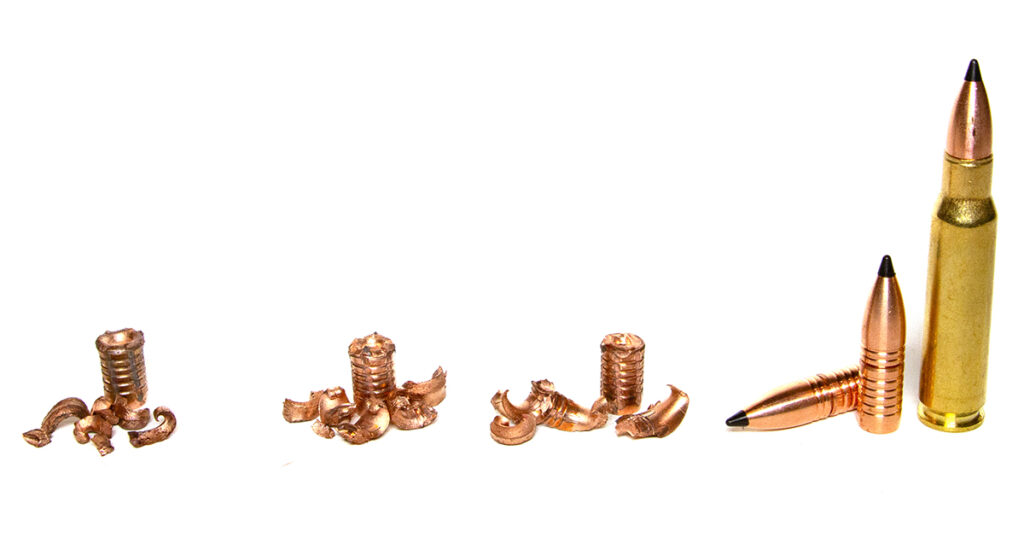
The Lehigh Defense Controlled Chaos bullet is a different take on the mono-metal bullet, and it’s a bullet that Hammer Bullets has tried to emulate. Instead of retaining its petals, it sheds them, almost immediately after impact. However, unlike the petals from most mono-metal bullets that, if they break off, tend to trail behind the main bullet path, the petals from the Controlled Chaos bullet push forward, radiating out from the path of the base of the bullet, creating their own paths of destruction.

Also, most mono-metal bullets need to impact at around 2,000 fps to deliver meaningful bullet upset, but the Controlled Chaos bullet—especially when twisted fast—will work at impact speeds as slow as 1,600 fps. Essentially, it’s a mono-metal bullet that works similar to a Nosler Partition, and it’s available in several variations. Though Controlled Chaos bullets generally deliver excellent precision, even the polymer-tipped Controlled Chaos bullets have lower ballistic coefficients than most jacketed or other mono-metal bullets of the same caliber and weight.
Enter, The Spin Doctor
In the past, we flattened trajectories with high velocity, which is why cartridges like the .300 Remington Ultra Magnum and all the Weatherby cartridges exist. However, with the modern cartridges and their fast twist rates, bullet engineers have more to work with.
The linear velocity of a bullet degrades swiftly after it exits the barrel because of gravity. At 400 yards, a bullet from a 6.5 Creedmoor will have lost nearly 25 percent of its velocity. However, the rotational velocity of a bullet hardly degrades at all over distance. This is, of course, what helps keep bullets stable in flight.
However, bullets that are spinning faster upset better on impact. The centrifugal force generated by the spin helps peel back the bullet’s jacket or petals. The faster a bullet is spinning the more rotational energy it has.
To get an idea of the difference in rotational velocities from a slow-twist rifle compared to a fast-twist rifle, we can compare a .308 Winchester with a 6.5 Creedmoor.
Most .308 Winchester rifles have a 1-in-10 twist, but the 6.5 Creedmoor has a 1-in-8 twist. If both rifles fire a bullet at 2,800 fps, the .308 Winchester bullet will have a rotational velocity of 201,600 rpm and the 6.5 Creedmoor bullet’s rotational velocity will be 25 percent faster at 252,000 rpm. The faster twist rate of the 6.5 Creedmoor allows it to shoot bullets with a higher ballistic coefficient and retain linear velocity better, but it also has more rotational velocity to help the bullet upset on impact.
This high rotational velocity is what allows the 8.6 Blackout cartridge, which has a crazy fast 1-in-3 twist, to deliver such violent wound cavities at supersonic velocities of around 2,000 fps and even at subsonic velocities. At subsonic velocity, the 8.6 Blackout has the same rotational velocity the 6.5 Creedmoor has at 2,800 fps. And at 2,000 fps, the 8.6 Blackout has an incredible rotational velocity of 480,000.
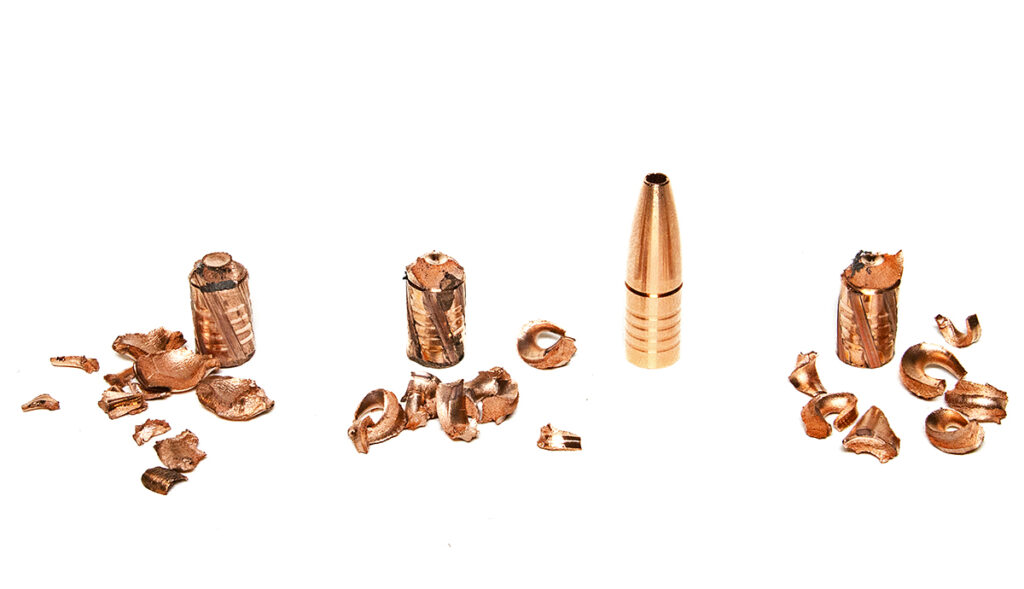
High rotational velocities are also why bullets fired from a 9mm Luger, with a twist rate of 1-in-10 and a rotational velocity of around 82,000 rpm, will upset over a wider impact velocity range than bullets fired from a .40 S&W or .45 Auto, which will only have a rotational velocity of about 51,750 rpm.
The point of all this is that, going forward, we can expect the fast twists we’ve seen with modern cartridges—the Creedmoors, PRCs, ARCs, the 7mm Backcountry and the brand-new 25 RPW Weatherby—to be the new standard. These fast twist rates help us shoot bullets that fly flatter and resist the wind, but they also help bullets upset and damage more tissue.
In the Field and in the Future
To sort of summarize all this, let’s look at two deer shot with the new, 1-in-7.5-inch twisted, .25 RPM Weatherby last deer season.

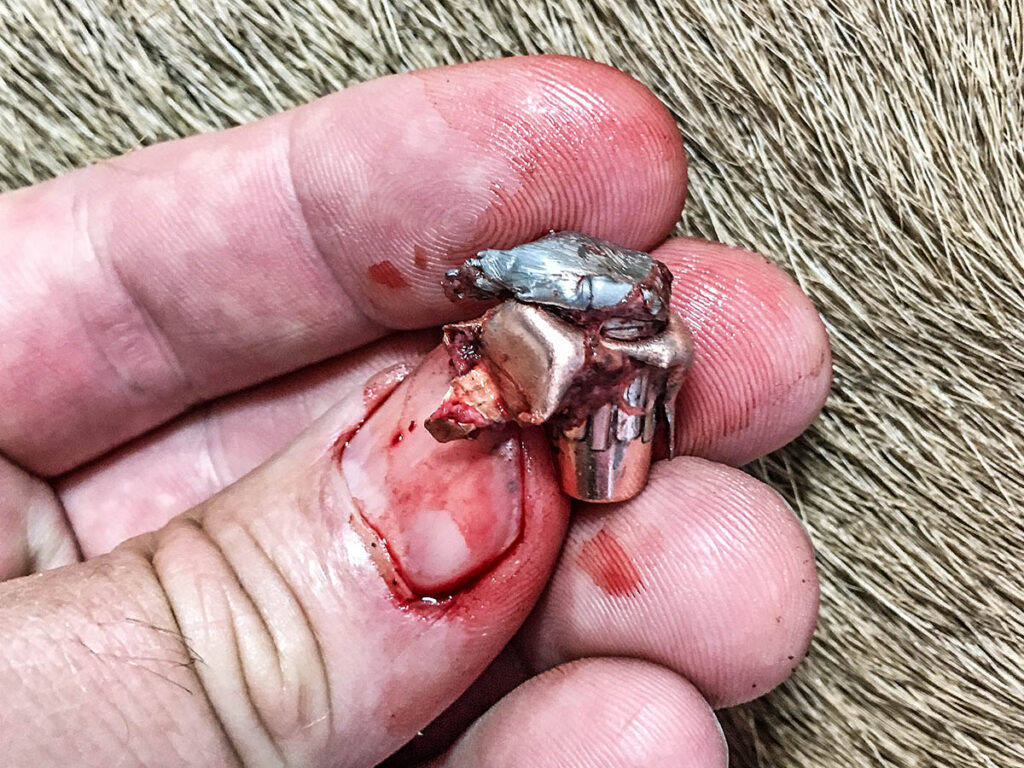
The bullet was a 102-grain Lehigh Defense Controlled Chaos bullet that left the muzzle at 3,400 fps. One deer was shot at 300 yards and the other at 420 yards. Now, this bullet does not have a high BC, at 300 yards it impacted at about 2,650 fps, and at about 2,400 fps at 420 yards. However, the high spin rate helped the bullet shed its petals, allowing them to track through the deer, creating their own paths of destruction all the way to the rib cage on the other side. The bullet’s base exited and when the petals reached the offside of the rib cage, each had radiated out from the main bullet path by about 4 inches.
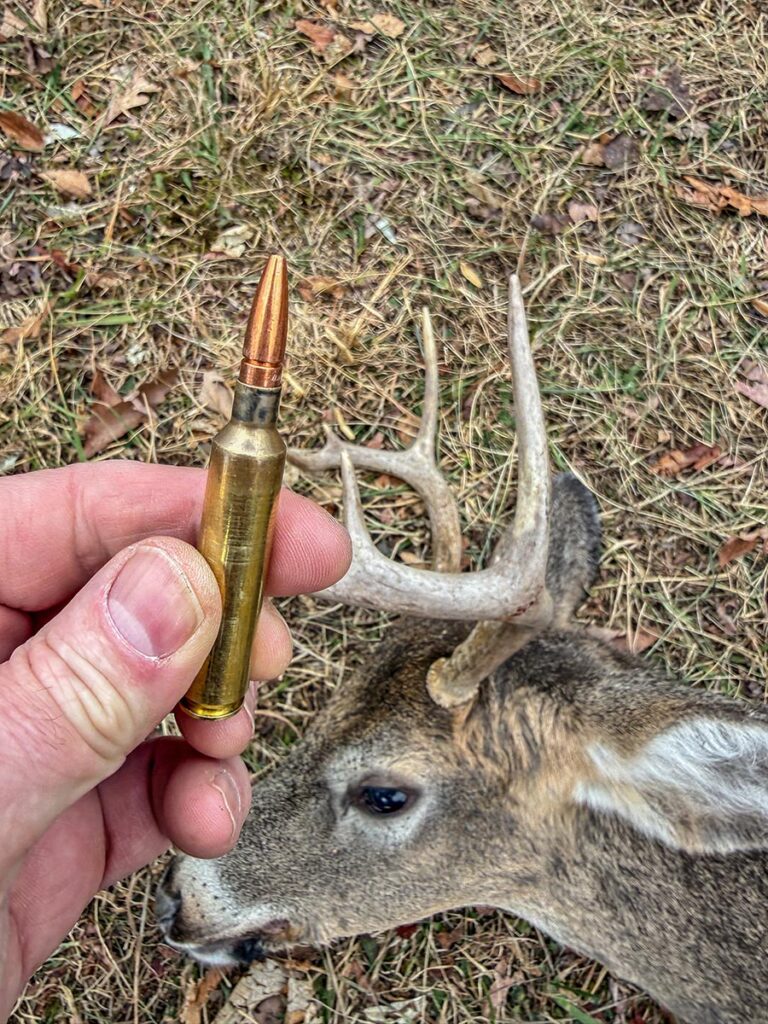
When those bullets impacted the deer, they had a rotational velocity of about 326,400 rpm. That’s 30 percent faster than a common 6.5 Creedmoor bullet.
Bullet engineers have just about exhausted all their options with both jacketed and mono-metal bullet designs. But an area they still have room to explore is how they can leverage faster twist rates with various bullet designs to not only make them fly flatter with less wind drift, but to also be more lethal.
I believe in the future we will be able to take bullets similar in design to the mono-metal Controlled Chaos and twist them fast enough to give us everything we need with regard to precision and external and terminal ballistics, up close and at distance.
You might say that, in more ways than just one, it’s a twisted new world we’re living in.
Editor’s Note: This article originally appeared in the February 2026 issue of Gun Digest the Magazine.
More On Rifle Bullets

Next Step: Get your FREE Printable Target Pack
Enhance your shooting precision with our 62 MOA Targets, perfect for rifles and handguns. Crafted in collaboration with Storm Tactical for accuracy and versatility.
Subscribe to the Gun Digest email newsletter and get your downloadable target pack sent straight to your inbox. Stay updated with the latest firearms info in the industry.


